Many patients can complete their implant treatment in as few as three visits, helping them get back to smiling sooner. In most cases, the entire process—from your first appointment to your final, permanent teeth—takes about six months.
Dental Implant Process in Overland Park, KS
A Step-by-Step Guide to Dental Implants at keith + associates dentistry implant center
At keith + associates dentistry implant center, we are proud to be one of the only practices that provides all of the components of the dental implant process in one place. Our goal is to make the process as stress-free as possible, which is why we do it all, from tooth extraction to bone grafting and 3D printing your temporary teeth. Many of our patients receive their implants in as few as three appointments, getting them smiling again quickly. For most of our patients, it only takes six months from their first appointment to receiving their permanent teeth.
Dental Implant Consultation
- Call our office or fill out our online form to schedule your consultation. Choose between in-person or virtual consultation options to fit your schedule.
- During your visit, we’ll evaluate your oral health to determine whether you’re a good candidate for Mission Implants.
- We’ll create a personalized treatment plan tailored to your needs and goals.
- You’ll have the opportunity to discuss your ideal smile and how you’d like your new teeth to look.
- Any necessary X-rays and records will be taken to ensure precise planning and optimal results.
Dental Implant Preparation
- If needed, we will perform tooth extractions and bone grafting as part of your treatment to properly prepare your mouth for dental implants.
- Tooth extractions are done to remove damaged or failing teeth and create the necessary space for your new, healthy smile.
- Bone grafting may also be recommended to rebuild and strengthen areas of the jaw that have experienced bone loss, ensuring sufficient support for the implants.
Dental Implant Procedure
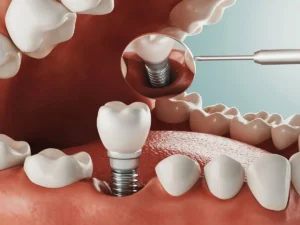
- The implant placement procedure typically takes just a few hours.
- We use IV sedation to ensure that you remain relaxed and completely comfortable throughout the entire process.
- Temporary teeth are custom-crafted in advance, so you won’t leave without a smile—you’ll walk out the same day with a full, functional set of teeth. Your temporary teeth allow you to eat soft foods, speak clearly, and smile confidently right away while your implants heal.
These temporary restorations are designed to look natural and function well, serving as a bridge until your permanent teeth are placed.
Dental Implant Aftercare
- It’s common to experience a small amount of bleeding for a day or two following the procedure. Biting down on a moistened gauze pad will help stop the bleeding. If bleeding persists for more than a couple of days, call our office right away.
- To help reduce swelling, place an ice pack on the face near the surgical site for 10 minutes, then remove it for 20 minutes and repeat.
- Practicing good oral hygiene will help the implants heal faster. It is important to gently brush the area around the surgical site to keep it clean. Additionally, make sure that you keep coming in for regular dental checkups.
- We will prescribe you painkillers following the surgery. You will likely want to take pain medication for the first couple of days following your surgery. Many of our patients only need to take over-the-counter pain medication to manage their pain. Most of the pain you experience should subside within a week following the procedure.
Dental Implant Technology
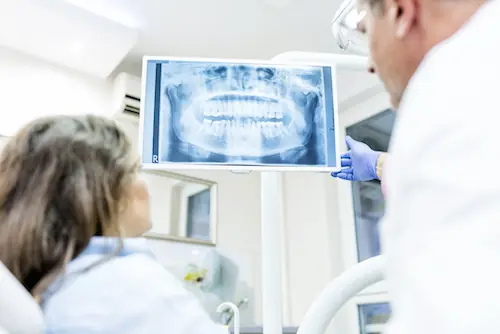
Digital X-Rays
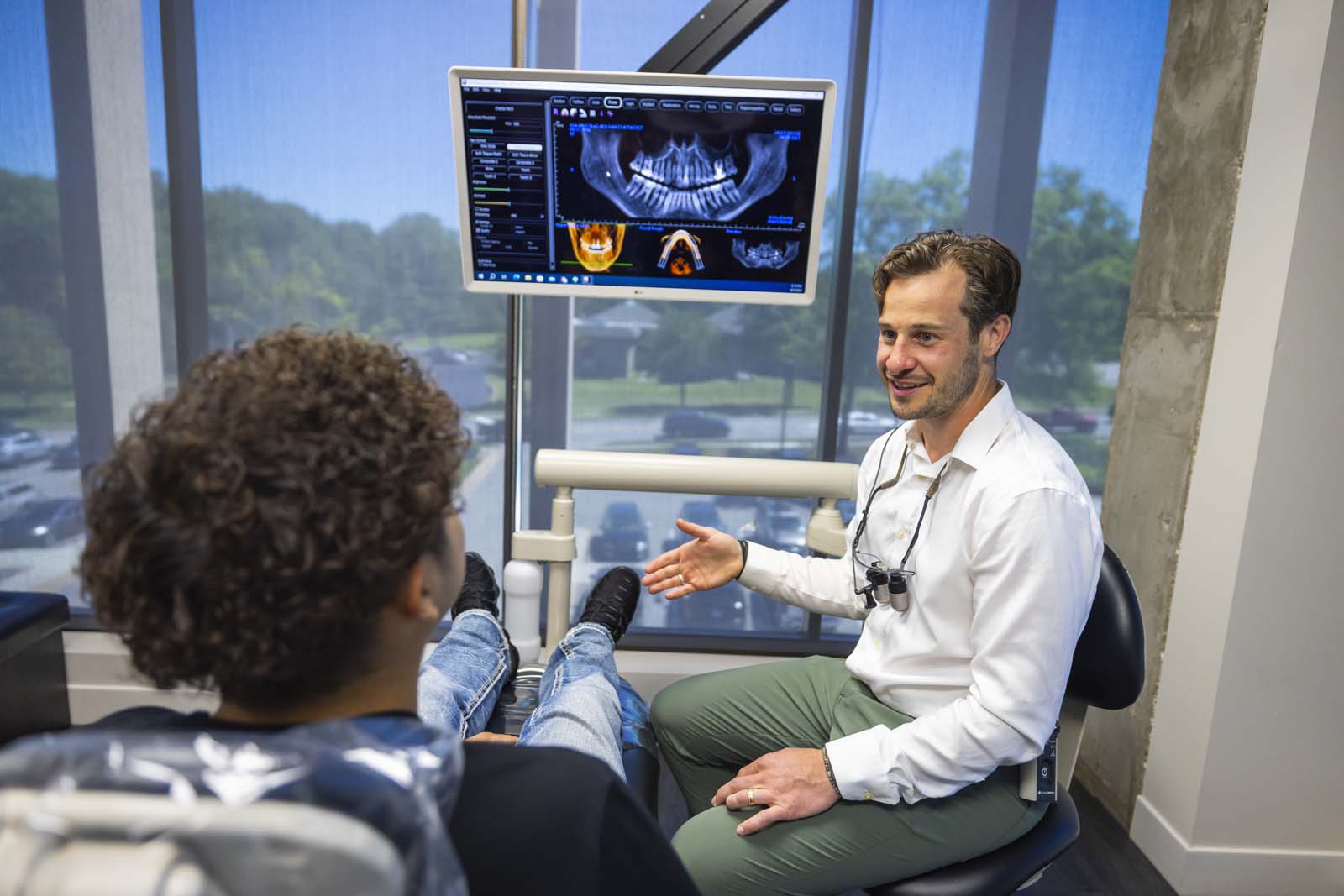
We use digital X-rays to capture precise images of your jawbone and surrounding structures, allowing us to plan your dental implant placement with exceptional accuracy and safety.

X-Guide
We are proud to be named an X-Guide center of excellence. This distinction is given to dental practices that achieve a high level of experience and expertise using X-Guide Dynamic Navigation technology to deliver optimal results to patients. This technology allows us to provide patients with the most accurate dental implant surgery, making it minimally invasive and providing patients with faster recovery times.
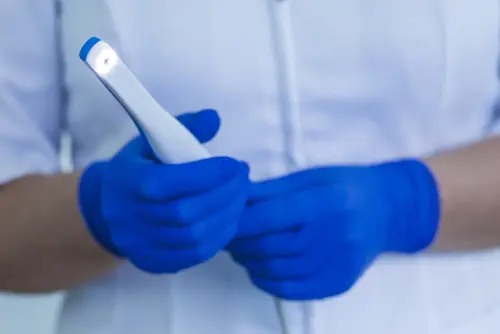
Intraoral Camera
We use this diagnostic tool to zoom in closely on specific teeth, providing a high-quality image of your teeth. The images are displayed on a screen for you and our dentist to review, giving you a better understanding of your diagnosis and treatment.
Dental Implant Process FAQs
-
How long does the dental implant process take?
-
Is the dental implant process painful?
Most patients are surprised by how comfortable the dental implant process is. The procedure is performed using local anesthesia and often IV sedation, so you won’t feel pain during treatment.
Afterward, it’s normal to experience some mild soreness, swelling, or tenderness for a few days, but this is typically manageable with medication and subsides quickly. Many patients say the recovery is easier than they expected.
-
Will I be sedated during dental implant surgery?
Yes, we offer IV sedation during dental implant surgery to ensure that you’re completely comfortable. This allows you to relax throughout the procedure, and most patients remember little to nothing about their visit. Our team will review your medical history and discuss sedation options with you beforehand to make sure your experience is safe, smooth, and stress-free.
-
Do all dental implant patients need bone grafting?
Not every patient needs bone grafting. It depends on the strength and density of your jawbone. If your jawbone is healthy and has enough volume to support implants, bone grafting may not be necessary. However, if bone loss has occurred due to missing teeth, gum disease, or other factors, a bone graft may be recommended to create a stable foundation.
During your consultation, we’ll use imaging and a thorough exam to determine whether bone grafting is needed for your specific case.
-
What is the transition smile stage?
After the implants are placed, osseointegration will occur over several months. This means that the jawbone heals around the implants, fusing them together. This period of healing is very important. If we don't give an adequate amount of time for your gums and bone to heal, the implants won't be able to provide a solid base for your new teeth.
-
How often will I need follow-up visits after my implants are complete?
Most patients will continue with routine dental checkups every six months, just like with natural teeth. During these visits, we’ll monitor your implants, check your gum health, and ensure that everything is functioning properly.
In some cases, we may recommend more frequent visits initially to closely track healing and long-term success. With proper care at home and regular checkups, your implants can remain strong and stable for many years.